
Web OnTrax

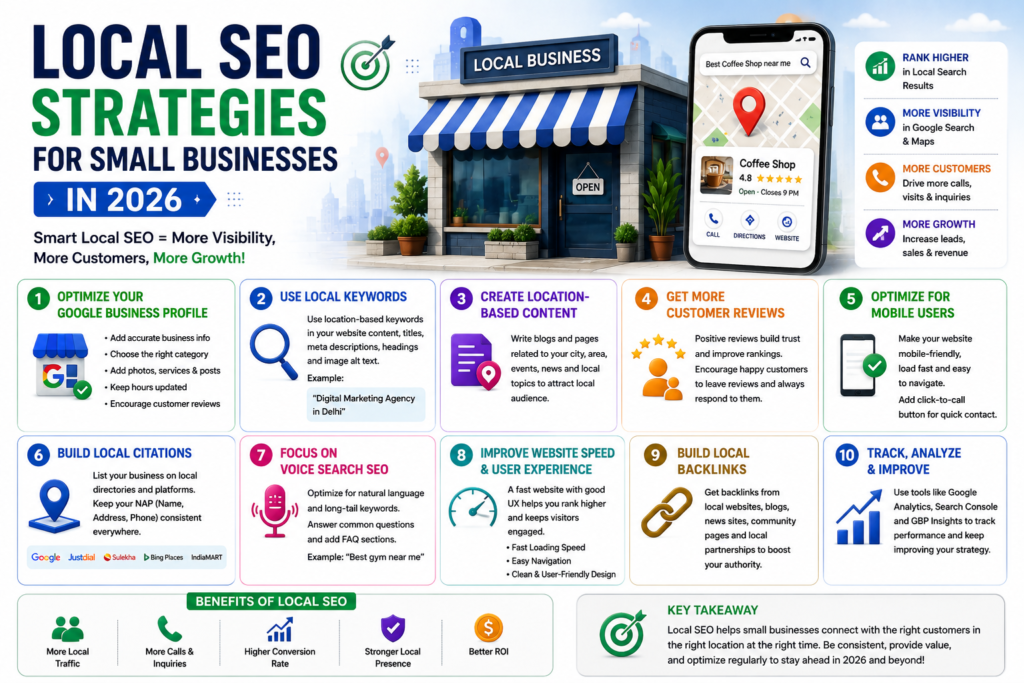
Local SEO Strategies for Small Businesses in 2026

In today’s digital world, having a website is not enough for small businesses. If customers in your local area cannot find your business online, you are losing valuable opportunities every day. This is where Local SEO becomes extremely important. Local SEO helps businesses appear in nearby searches on Google, Google Maps, and other search platforms. Whether you own a restaurant, salon, gym, clinic, marketing agency, or retail shop, local SEO can help you attract more customers from your area. In 2026, local search is becoming smarter with AI-powered search results, voice search, and personalized recommendations. Small businesses that optimize for local SEO are gaining better visibility, more leads, and higher sales. What is Local SEO? Local SEO (Search Engine Optimization) is the process of optimizing your online presence so your business appears in local search results. For example, when someone searches: Google shows nearby businesses based on relevance, reviews, location, and website optimization. Local SEO helps your business rank higher in these searches. Why Local SEO is Important for Small Businesses Most customers now search online before visiting a local business. If your business appears in top search results, you have a better chance of getting calls, website visits, and store traffic. Benefits of local SEO include: Local SEO is one of the most cost-effective marketing strategies for small businesses. Optimize Your Google Business Profile Your Google Business Profile (formerly Google My Business) is the foundation of local SEO. To improve rankings: Businesses with optimized profiles usually rank better on Google Maps and local search results. Use Local Keywords Local keywords help Google understand your business location and services. Instead of targeting only: Use: Add local keywords naturally in: This increases your chances of appearing in location-based searches. Create Location-Based Content Creating local content helps improve local relevance and SEO rankings. You can publish blogs like: Location-specific content attracts targeted local traffic and improves authority in your area. Get More Customer Reviews Online reviews play a major role in local SEO rankings. Positive reviews improve: Encourage satisfied customers to leave reviews on: Always respond professionally to both positive and negative reviews. Optimize Your Website for Mobile Users Most local searches now happen on smartphones. Your website should: A slow or outdated website can reduce rankings and increase bounce rates. Build Local Citations Local citations are mentions of your business on online directories. Important citation platforms include: Make sure your: remain consistent across all platforms. Focus on Voice Search SEO Voice searches are increasing rapidly in 2026. People now search using conversational phrases like: To optimize for voice search: Voice-friendly content improves local search visibility. Improve Website Speed and User Experience Google prioritizes websites that offer good user experience. To improve performance: A better user experience helps both SEO rankings and customer engagement. Build Local Backlinks Backlinks from local websites improve your website authority. You can get local backlinks through: Quality backlinks signal trust and improve local rankings. Final Thoughts Local SEO is becoming more powerful and competitive in 2026. Small businesses that invest in local optimization can attract more customers, improve online visibility, and grow faster in their local markets. The key to successful local SEO is consistency, valuable content, strong customer reviews, and a well-optimized online presence. Businesses that focus on local search today will have a major advantage in the future

Local SEO Strategies for Small Businesses in 2026 Read More »
How AI is Changing Digital Marketing in 2026

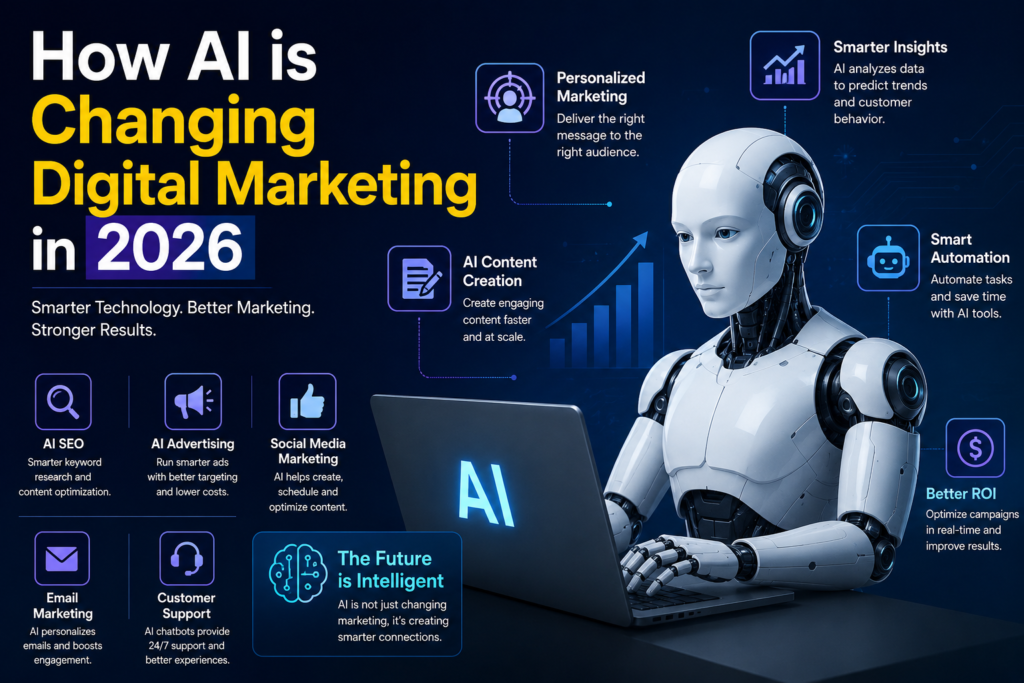
Artificial Intelligence is no longer just a futuristic concept. In 2026, AI has become one of the biggest driving forces behind digital marketing. From content creation to customer targeting, businesses are using AI to improve performance, save time, and create personalized experiences for their audience. The way brands connect with customers is changing rapidly, and marketers who adapt to AI trends are staying ahead of the competition. What is AI in Digital Marketing? AI in digital marketing refers to using smart technologies and machine learning tools to automate tasks, analyze data, and improve marketing strategies. AI helps businesses understand customer behavior, predict trends, and create better campaigns with less manual effort. Today, AI tools are being used for: AI is making marketing faster, smarter, and more effective than ever before. Personalized Marketing is Becoming Smarter One of the biggest changes AI has brought to digital marketing is personalization. In 2026, customers expect brands to understand their interests and preferences. AI analyzes user behavior, browsing history, and engagement patterns to deliver personalized recommendations and content. For example: This level of personalization improves customer experience and increases conversion rates. AI is Transforming SEO Search Engine Optimization has changed significantly because of AI-powered search engines. Google’s AI algorithms now focus more on: Keyword stuffing no longer works like it did in the past. In 2026, successful SEO strategies focus on creating valuable, human-friendly content. AI SEO tools help marketers: Businesses that combine AI tools with human creativity are getting better search rankings and more organic traffic. AI Content Creation is Growing Fast Content creation has become easier with AI writing tools like ChatGPT and other automation platforms. Marketers now use AI to create: However, human creativity still plays an important role. AI can generate ideas and drafts quickly, but emotional storytelling and authentic brand voice still require a human touch. The best-performing content in 2026 is a combination of AI efficiency and human creativity. Social Media Marketing is More Automated AI is helping brands manage social media more effectively. Modern AI tools can: Brands are also using AI-generated videos and AI voiceovers to create short-form content for Instagram Reels, YouTube Shorts, and TikTok. This allows businesses to stay active online without spending countless hours managing social platforms manually. AI-Powered Advertising is Improving ROI Paid advertising has become smarter with AI-driven targeting. Platforms like Google Ads and Meta Ads now use AI to: AI can analyze huge amounts of data within seconds, helping advertisers make faster and more accurate decisions. As a result, businesses are achieving better ROI from digital advertising campaigns. Chatbots and AI Customer Support Customer service has also improved with AI chatbots. In 2026, AI chatbots are handling: These chatbots work 24/7 and provide instant support, improving customer satisfaction while reducing workload for businesses. The Future of AI in Digital Marketing AI will continue to shape the future of marketing in the coming years. Businesses that embrace AI technologies early will have a competitive advantage. But despite rapid automation, human creativity, emotions, and storytelling will remain essential in marketing. AI can support marketers, but it cannot completely replace human connection. Final Thoughts AI is changing digital marketing faster than ever before. From SEO and content creation to social media and advertising, AI is helping businesses work smarter and connect with customers more effectively. In 2026, successful marketers are not afraid of AI — they are learning how to use it strategically. The future of digital marketing belongs to brands that combine technology with authentic human creativity.

How AI is Changing Digital Marketing in 2026 Read More »